Listen to this Article
Editor’s Note (June 2025): With rising funeral costs and a growing wave of Baby Boomers entering their late 70s and 80s, preneed planning conversations are more relevant than ever. Funeral homes that invest in empathy-first marketing today are positioning themselves as trusted community resources — not just service providers. We’ve updated this piece to reflect current consumer sentiment and digital outreach trends shaping the preneed landscape this year.
The Conversation Families Are Already Having — Without You
Here’s something most preneed directors already know but rarely build marketing around: families don’t wake up one morning and decide to plan their funeral. The decision unfolds slowly, often over months or even years. It starts with a moment — a parent’s health scare, a neighbor’s unexpected death, a quiet Sunday afternoon when someone thinks, “I really should get my affairs in order.”
By the time a family contacts a funeral home, they’ve already done research, talked to friends, and formed opinions. Your marketing didn’t start their journey. But it could have been there all along the way.
That’s the opportunity most funeral homes are missing.
What Families Are Actually Looking For
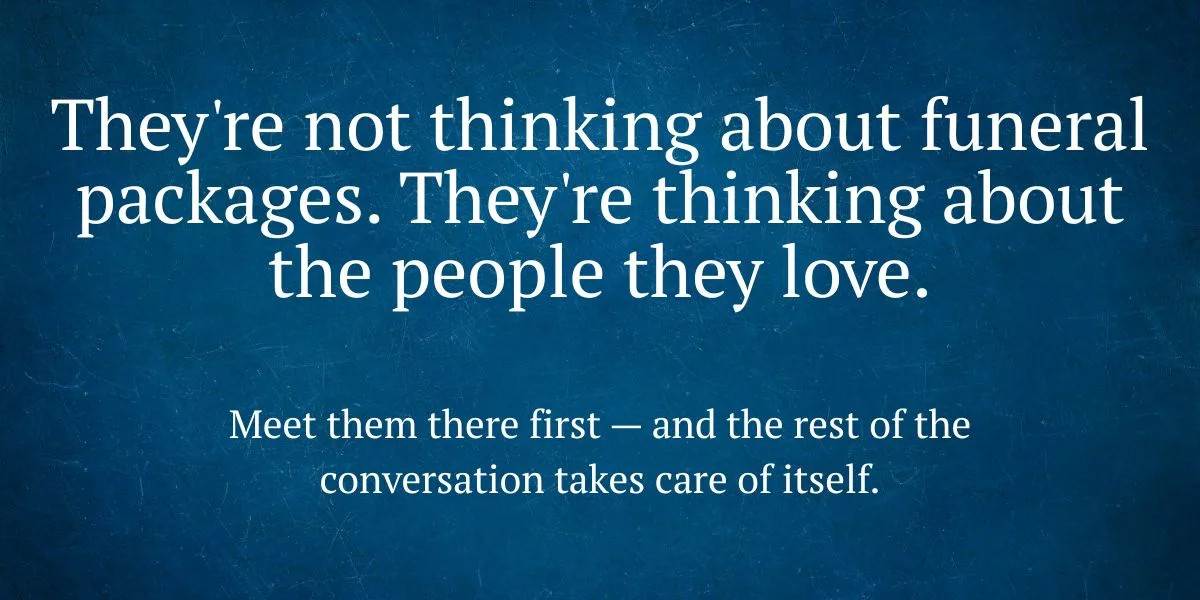
Before a family ever asks about pricing, packages, or payment plans, they’re working through something much more personal. Understanding this emotional landscape is the foundation of effective preneed marketing.
1. They Want to Feel Like They’re Doing the Right Thing
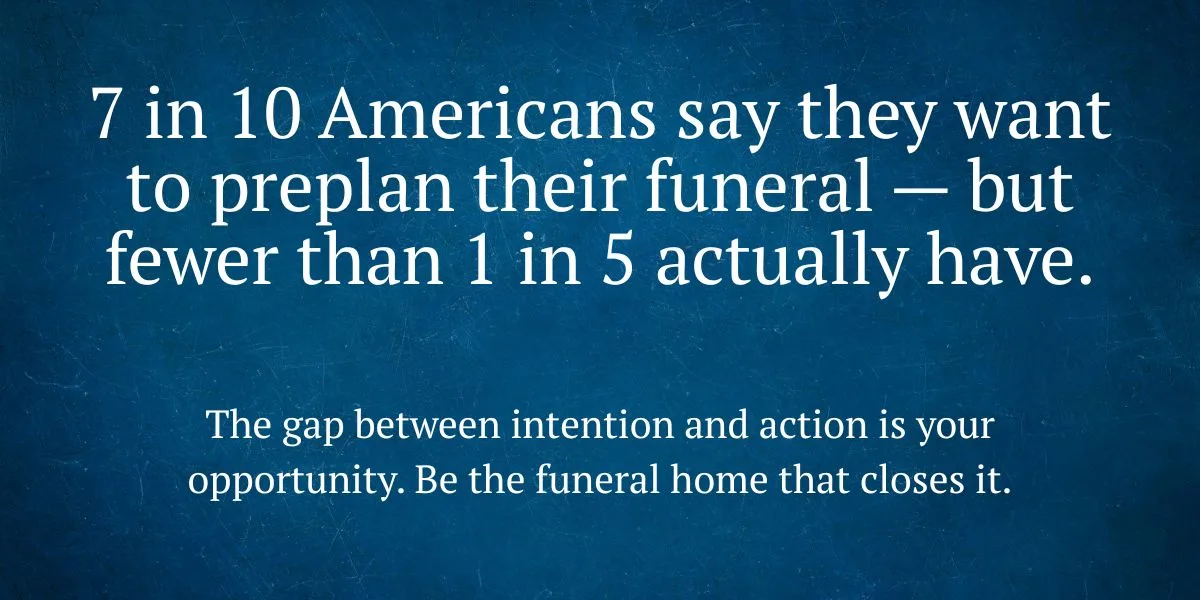
Preneed planning is, at its core, an act of love. People who choose to preplan are thinking about their families — they want to spare their loved ones the burden of making difficult decisions during grief. Your marketing should speak to that motivation directly.
Instead of leading with cost savings or product features, lead with the gift of peace of mind. Messaging like “Give your family the gift of clarity” or “Make the hardest decision easier for the people you love” speaks to why people actually plan — not just what they’re buying.
2. They Want to Feel in Control
Aging, illness, and the loss of independence are fears that hover in the background of preneed planning. When someone reaches out to preplan, part of what they’re doing is reclaiming a sense of agency. They’re saying: “I get to decide this.”
Marketing that reinforces autonomy and personal choice will resonate strongly. Feature language like “plan on your terms,” “your wishes, documented your way,” or “complete control over every detail” taps into this core motivator. The more your content positions preneed planning as empowering rather than morbid, the more it will connect.
3. They Want to Trust You Before They Meet You
This is perhaps the most important insight for funeral home marketing: families are vetting you long before they ever walk through your door.
They’re reading your website. They’re looking at your Google reviews. They’re checking your Facebook page. They’re asking neighbors. In many cases, they’ve already decided whether or not they trust you before the first phone call.
That means your marketing isn’t just advertising — it’s trust-building infrastructure. Every blog post, every community event announcement, every testimonial you share is either adding to or subtracting from your credibility with potential preneed clients.
4. They Don’t Want to Be Sold To
This is the tension at the heart of preneed marketing, and it’s worth saying plainly: most people approaching the idea of preplanning are emotionally guarded. They’re dealing with their own mortality. The last thing they want is to feel like a prospect being closed.
If your marketing feels pushy, transactional, or sales-heavy, it will do more harm than good. Families need to feel like they’re making their own decision at their own pace — and your job is to be a calm, credible, helpful presence during that process.
The Marketing Playbook: Meeting Families Where They Are
With that understanding of consumer psychology in place, here’s how to build a preneed marketing approach that actually works.
Build a Content Library That Answers Real Questions
One of the highest-return investments a funeral home can make in preneed marketing is consistent, genuinely helpful content. Think about the questions families have before they’re ready to call:
- “What does preneed planning actually involve?”
- “Is preplanning a funeral worth it?”
- “How much does a funeral cost, and can I lock in today’s prices?”
- “What happens to my preneed plan if I move or the funeral home closes?”
- “Can I preplan if I don’t know exactly what I want yet?”
These are real searches happening every day. Funeral homes that answer them clearly — in blog posts, FAQ pages, and short videos — show up when families are looking, and they show up as helpful rather than salesy.
A content library also signals professionalism and depth. A funeral home with twenty thoughtful blog posts on preplanning looks different to a prospective family than one with a single outdated “About Us” page.
Use Email Nurture to Stay Present Over Time
Most preneed leads aren’t ready to commit immediately. They may be thinking about it, researching it, or waiting for the right moment. A well-designed email nurture sequence keeps your funeral home in their minds without pressure.
Consider offering a free download — a “Preneed Planning Guide,” a “What to Prepare Before You Meet With Us” checklist, or a “Questions to Ask When Preplanning” resource — in exchange for an email address. Then send a short, helpful email once or twice a month that provides genuine value.
Over time, these emails build familiarity and trust. When a family is finally ready to plan, they’ll think of you first — because you’ve been a consistent, helpful presence in their inbox.
Leverage Community Partnerships Strategically
Some of the most effective preneed marketing doesn’t look like marketing at all. Partnerships with elder care attorneys, financial planners, hospice organizations, senior centers, and faith communities create warm referral pipelines that are built on trust by design.
Consider hosting a free educational seminar — “Getting Your Affairs in Order” or “What Every Family Should Know About End-of-Life Planning” — at a local senior center or library. These events position your funeral home as a community resource rather than a vendor, and they attract exactly the audience most interested in preneed.
The families who attend these events are already motivated. They came voluntarily. That changes the entire dynamic of the preneed conversation.
Make Your Digital Presence Work Harder
Your website is your most important marketing asset, and for many funeral homes, it’s significantly underperforming. A few high-impact improvements:
Preneed-specific landing page. Don’t bury preneed information inside a general “Services” dropdown. Create a dedicated page that speaks directly to the concerns, questions, and motivations of someone exploring preplanning. This page should load fast, be easy to read on a phone, and include a clear, low-pressure call to action (a guide download, a “schedule a no-obligation conversation” button, or a simple contact form).
Real testimonials from preneed families. Social proof is powerful, and in this space, it’s rare. If you can collect and display even three or four testimonials from families who preplanned, you will stand out from nearly every competitor. A quote like “Planning ahead was the best thing we ever did for our family. The team at [Funeral Home] made it completely comfortable” does more for conversions than any headline you can write.
Google Business Profile optimization. Many families searching for preneed options will find you through Google Maps before they ever reach your website. Make sure your profile is complete, updated, and actively collecting reviews. Respond to every review — positive or negative — professionally and warmly. This is visible to every prospective family who looks you up.
Train Your Team to Have Human Conversations
Even the best marketing breaks down if the first phone call or visit feels cold or awkward. Preneed marketing is as much about internal culture as it is about external outreach.
Make sure anyone who answers the phone or meets with a potential preneed client understands the emotional state that person may be in. They may be grieving a recent loss. They may be facing a health diagnosis. They may be anxious and uncertain about even having this conversation. A warm, unhurried, genuinely empathetic response to that first inquiry can convert a hesitant lead into a loyal client — and a hesitant response can lose them forever.
A Note on Tone: Compassion Is Your Competitive Advantage
Funeral homes sometimes underestimate how much their tone and brand voice matter in preneed marketing. In a landscape where many providers sound transactional and clinical, a funeral home that communicates with genuine warmth and compassion stands out immediately.
This doesn’t mean avoiding the practical details. Families absolutely need clear information about costs, process, and what to expect. But it means leading with care and letting the logistics follow. It means writing website copy that sounds like a thoughtful person, not a brochure. It means social media posts that share something real about your team, your community, and your values, not just promotional announcements.
In preneed specifically, trust is the product. Marketing that builds trust, rather than just awareness, is the strategy that compounds over time.
Want More Preneed Appointments?
Discover how top funeral homes are connecting with motivated preneed prospects in their communities. Book a free consultation today and let’s build a strategy that works for your market.
The Bottom Line
Families who are open to preneed planning aren’t looking for a sales pitch. They’re looking for a trusted guide — someone who understands what they’re feeling, answers their questions honestly, and helps them do something meaningful for the people they love.
Funeral homes that build their preneed marketing around that truth — rather than around products and pricing — will consistently outperform those that don’t. The families are out there. They’re thinking about this. They just need to find you first, and trust you when they do.
That’s what good preneed marketing makes possible.