Updated November 12, 2026 — This article has been updated with current Board of Veterans’ Appeals and Court of Appeals for Veterans Claims data, record 2026 claims volume, and corrected guidance on how VA disability attorneys are paid.
Do Attorneys Improve Outcomes in VA Disability Appeals? What the Latest Data Shows
Veterans who are denied disability benefits, or who receive a lower rating than they believe they deserve, have the right to challenge that decision. Many do so on their own. Others work with a Veterans Service Organization (VSO), a VA-accredited claims agent, or an attorney. For law firms that practice veterans disability law, a key question is how much representation actually changes the outcome.
The latest federal data offers a clear picture. Below, we look at how the VA appeals process works today and what the numbers say about represented versus unrepresented veterans. Plus, why demand for appeals help remains strong this year and what attorneys should know about fees, accreditation, and finding new clients.
How the VA Appeals Process Works Today
The VA appeals system changed significantly when the Appeals Modernization Act (AMA) took effect. The AMA introduced new review options for VA decisions issued on or after February 19, 2019. Appeals filed under the old process are called “legacy” appeals, and most of the work today falls under the AMA.
Under the AMA, a veteran who disagrees with a decision generally has three options. A Supplemental Claim allows the veteran to submit new and relevant evidence for another review. A Higher-Level Review asks a more senior reviewer to take a second look at the same evidence. A Board Appeal sends the case to the Board of Veterans’ Appeals. This is where a Veterans Law Judge reviews it through a direct review, evidence submission, or hearing docket.
Each option produces different results. An analysis of seven years of AMA data found that Supplemental Claims had a 48% grant rate. The Higher-Level Reviews had a 24% grant rate but much faster turnaround, with 97.8% decided within 125 days in FY 2025. Choosing the right lane for a specific case is one of the most important strategic decisions in a VA appeal. And it is one area where experienced representation can make a real difference.
If the Board denies the appeal, the veteran can take the case to the U.S. Court of Appeals for Veterans Claims (CAVC), an independent federal court.

What the Data Says About Attorney Representation
At the Board level, outcomes vary noticeably by representation type. According to the Board’s FY 2024 Annual Report, attorney-represented veterans had a 42.7% appeal approval rate, compared with 29.7% for unrepresented veterans. Denial rates show a similar gap, with a 12.7% denial rate for attorney-represented appeals versus 21.2% for unrepresented veterans. Most VSO-represented appeals fell in between, with approval rates of roughly 30% to 32%.
These numbers come with two important caveats. First, an “allowed” appeal at the Board can include a partial grant. In FY 2024, the Board counted an appeal as allowed if any single issue in it was granted. Second, the data shows a correlation, not a guarantee. Cases that attorneys accept may differ from cases veterans pursue alone. Still, the consistent gap across representation types suggests that experienced legal help is associated with better results.
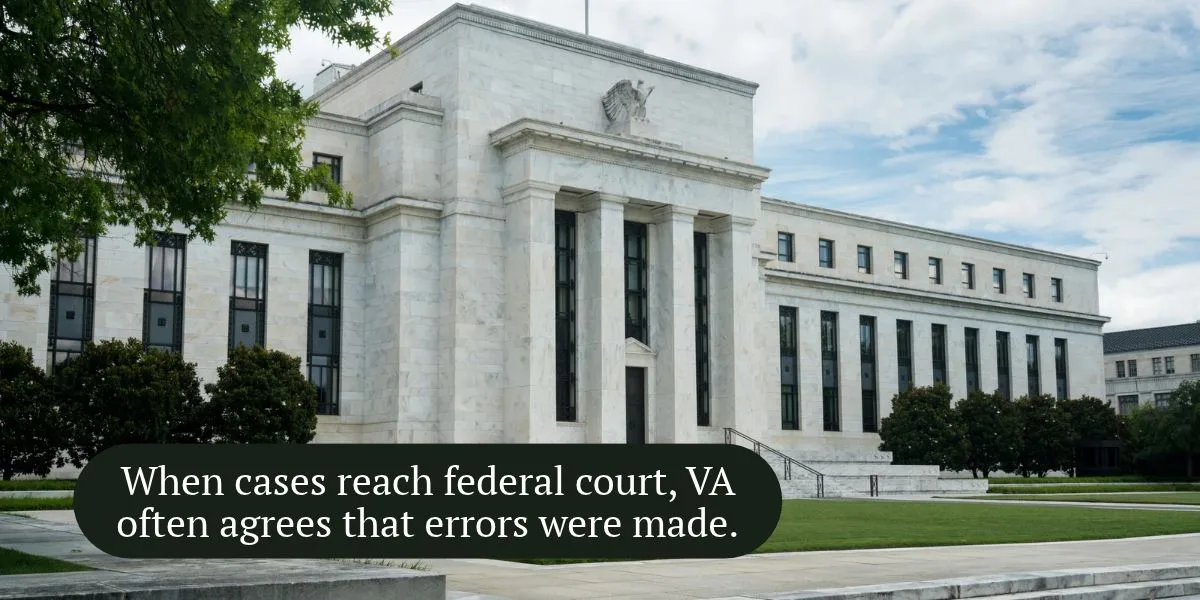
The strongest evidence of error in VA decisions appears at the Court level. The CAVC reported that in 76% of cases that went through pre-briefing mediation conferences in FY 2025, VA agreed that the Board’s decision contained an error requiring a remand. In other words, when a represented veteran challenges a Board decision in federal court, VA frequently concedes that something went wrong.
Why Demand for VA Appeals Help Remains Strong in 2026
The VA is deciding more disability claims than ever before. VA processed more than 3 million disability benefits claims in fiscal 2026 as of September 18, 2026, breaking the record it set in fiscal 2025. Much of that volume traces back to the PACT Act. VA officials have pointed to the surge in claims after the 2022 PACT Act, which expanded eligibility and encouraged more veterans to file.
More decisions also mean more decisions that veterans may want to challenge. In fiscal 2025, roughly 42% of approved claims were related to the PACT Act, and the overall approval rate reported for that year was 62%. That leaves a large number of denials and partial grants each year.
Appeals activity is rising at every level. The Board held 19,891 hearings and decided 123,962 appeals in FY 2025, a 7% increase over the previous record of 116,192 decisions in FY 2024. At the federal court level, the CAVC received a record 10,449 appeals in FY 2025, a 17% increase over the prior year.
How VA Disability Attorneys Are Paid
Fee rules for veterans disability cases are different from most practice areas, and they are often misunderstood.
No fees for initial claims. Accredited representatives generally cannot charge for help with an initial claim. As the Legal Information Institute explains, no representative may charge veterans for help filing initial claims or take any portion of their future monthly VA payments. Fees can be charged for work performed after VA issues a decision on the claim.
Contingency fees from past-due benefits. Most attorneys at the regional office and Board levels work on a contingency basis. Under federal law, a fee of 20 percent of the past-due benefits awarded on a claim is presumed to be reasonable. When the fee agreement qualifies for direct payment, VA can withhold the fee from the veteran’s past-due benefits and pay the attorney directly.
EAJA fees at the Court of Appeals for Veterans Claims. The Equal Access to Justice Act (EAJA) allows attorneys to have the government pay their fees in certain cases. However, EAJA applies only to the portion of the case before the Court of Appeals for Veterans Claims. If the attorney later receives a contingency fee on the same claim, the EAJA payment is generally offset against it. For example, a $5,000 EAJA payment would be deducted from a $20,000 contingency fee on a $100,000 past-due award.
Accreditation and Professional Responsibility
Attorneys must be accredited by VA to represent veterans in benefits claims. VA accreditation is federal authorization issued that allows specific individuals to prepare, present, and prosecute benefit claims on behalf of veterans. Accreditation also comes with continuing education requirements and ongoing compliance obligations.
Because veterans are often dealing with serious health conditions, financial strain, and frustration with the system, clear communication matters. Explaining fee agreements, setting realistic expectations, and keeping clients informed all help build trust and avoid disputes.
Finding Veterans Who Need Appeals Help
For many firms, the biggest challenge is not winning cases but connecting with veterans at the right moment. Attorneys can only charge for work after an initial decision. Therefore, the most valuable prospects are veterans who have already received a denial or a rating they believe is too low.
Qualify leads around the decision. Useful screening questions include whether the veteran has received a decision. These include when it was issued, what conditions were denied or underrated, and whether they already have a representative. Timing matters, because most AMA review options must be requested within one year of the decision to protect the effective date. An appeal to the CAVC must generally be filed within 120 days of the Board’s decision.
Respond quickly and with care. Many veterans reaching out for help are frustrated after a long process. A prompt, respectful first conversation can make the difference between a veteran signing with your firm or giving up on the appeal altogether.
Respect consent rules. If your firm uses calls or texts to follow up with prospects, make sure consent is properly documented and that opt-out requests are honored promptly.
Keep messaging accurate. Advertising for veterans disability services should be clear and truthful, avoiding promises about outcomes. State bar advertising rules and VA’s own rules on accredited representation both apply.

Looking to connect with more veterans who need appeals help?
f you are exploring lead generation options for your veterans disability practice, our team is happy to talk through what may fit your goals.
Frequently Asked Questions
Do attorneys improve outcomes in VA disability appeals?
According to Board of Veterans’ Appeals data, attorneys are associated with better outcomes in VA disability appeals. In FY 2024, attorney-represented veterans had a 42.7% approval rate at the Board, compared with 29.7% for unrepresented veterans. Results vary by case and the data reflects correlation rather than a guarantee.
What are the three VA appeal options under the Appeals Modernization Act?
The three VA appeal options under the Appeals Modernization Act are a Supplemental Claim, a Higher-Level Review, and a Board Appeal. Each option has different evidence rules, timelines, and grant rates, so choosing the right one depends on the facts of each case.
Can attorneys charge veterans for help with an initial VA claim?
Attorneys generally cannot charge veterans for help with an initial VA disability claim. Fees can be charged only for work performed after VA issues a decision on the claim.
How much can a VA disability attorney charge?
A VA disability attorney commonly charges a contingency fee based on past-due benefits, and a fee of 20% is presumed reasonable under federal rules. When the agreement qualifies, VA can pay that fee directly to the attorney from the veteran’s past-due benefits.
Does the Equal Access to Justice Act pay attorney fees in all VA appeals?
The Equal Access to Justice Act does not pay attorney fees in all VA appeals. EAJA applies only to cases before the U.S. Court of Appeals for Veterans Claims, and any EAJA award is generally offset against a later contingency fee on the same claim.
Is demand for VA disability appeals growing?
Demand for VA disability appeals remains strong in 2026. VA processed a record number of claims in both fiscal 2025 and 2026, and the Board and the Court of Appeals for Veterans Claims both reported record appeal volumes in FY 2025.
Conclusion: Representation Matters at Every Stage
The data tells a consistent story. Veterans who appeal with experienced representation tend to see more favorable outcomes at the Board, and when cases reach federal court, VA often agrees that errors were made. With record claim volumes and rising appeal activity, the need for knowledgeable veterans disability attorneys is not slowing down.
For firms in this practice area, success depends on more than legal skill. It requires understanding the AMA’s review options, following VA’s fee and accreditation rules, and connecting with veterans at the point when they need help most. Firms that combine strong advocacy with clear communication and a reliable way to reach veterans after a decision are well positioned to grow their practice while helping veterans receive the benefits they have earned.