Maximize Attendance & ROI: How to Plan Seminar and Webinar Dates That Perform
If your event strategy feels reactive instead of intentional, you’re not alone. Many businesses host seminars and webinars when they have time, rather than when their audience is most likely to engage.
The result? Lower attendance, inconsistent pipelines, and missed opportunities to connect with qualified prospects.
Optimizing your event marketing calendar isn’t just about filling dates. It’s about aligning timing, frequency, and messaging with how your audience actually behaves throughout the year. When done right, your calendar becomes a predictable engine for engagement, education, and conversion.
This guide breaks down exactly how to plan in-person seminars and webinar dates for maximum impact, so every event works harder for your business.
Why Event Calendar Optimization Matters
Events are one of the few marketing channels that allow for real-time connection, trust-building, and education. But without a strategic calendar behind them, even the best events can underperform.
A well-optimized event calendar helps you:
- Maintain a steady flow of qualified prospects
- Avoid audience fatigue and oversaturation
- Improve attendance rates and engagement levels
- Align your messaging with real-world decision timelines
- Maximize ROI across your marketing efforts
Instead of scrambling to fill seats, you create a rhythm your audience comes to expect and rely on.
The Best Days and Times to Boost Attendance
Timing plays a critical role in event success. Even the most compelling topic can struggle if it’s scheduled at the wrong time.
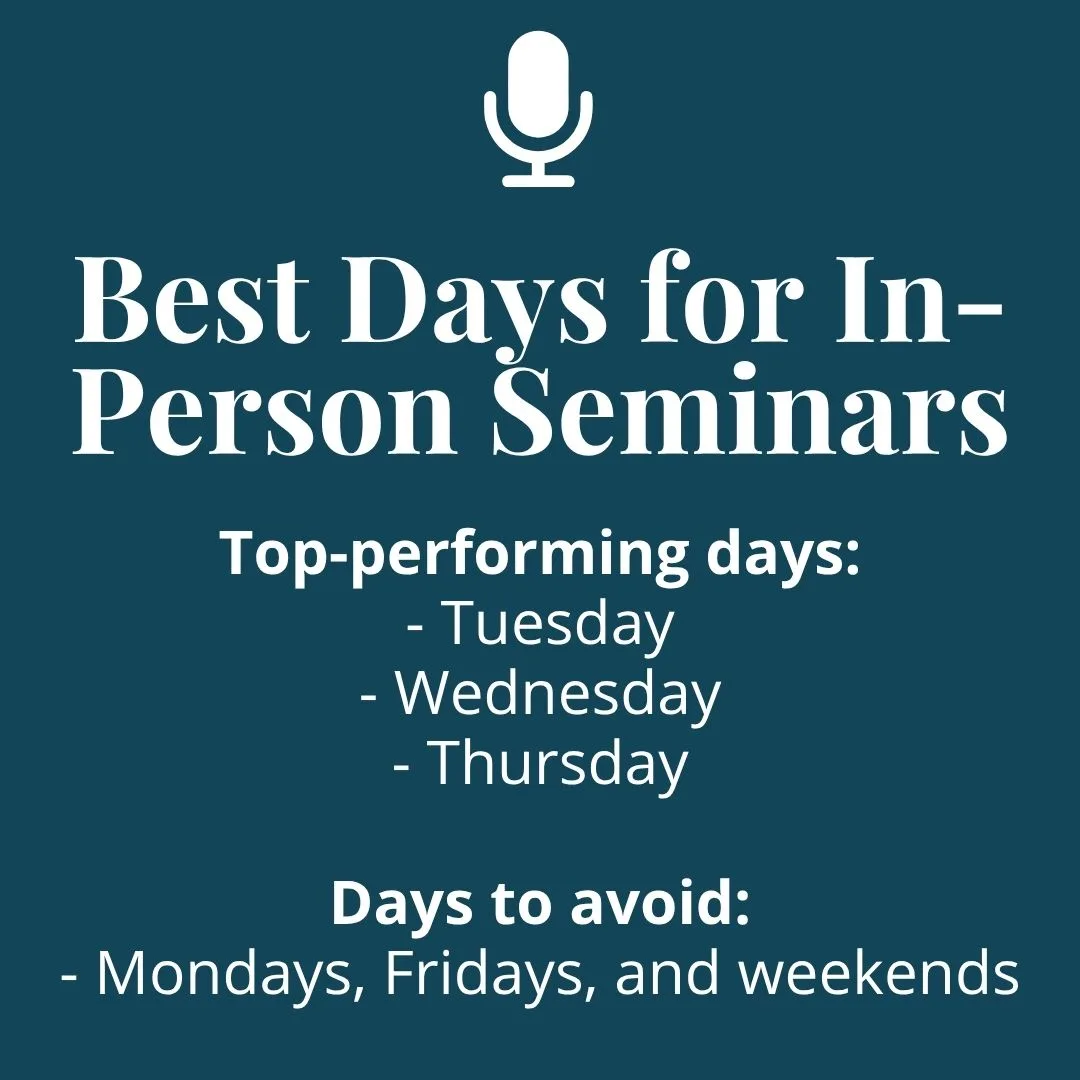
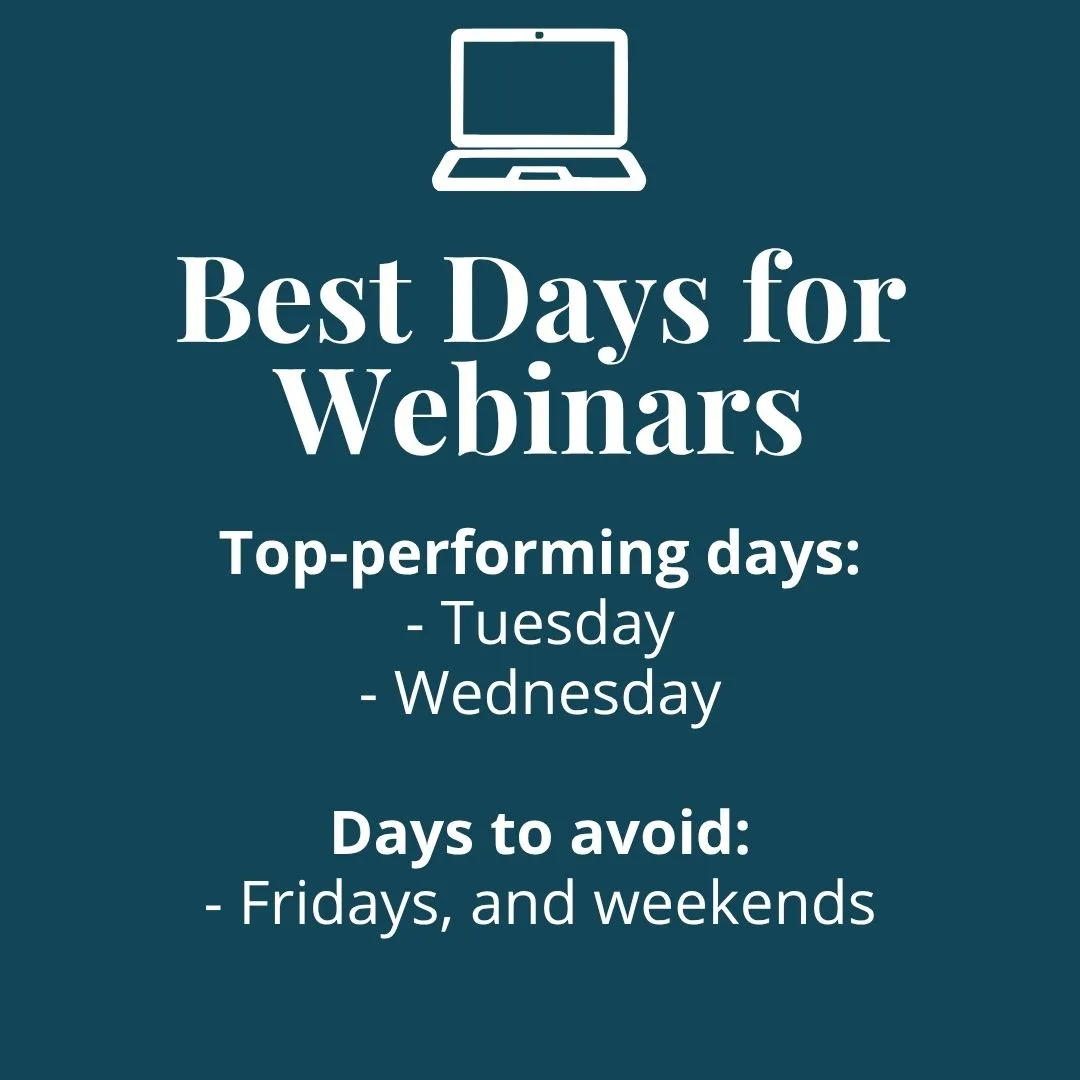
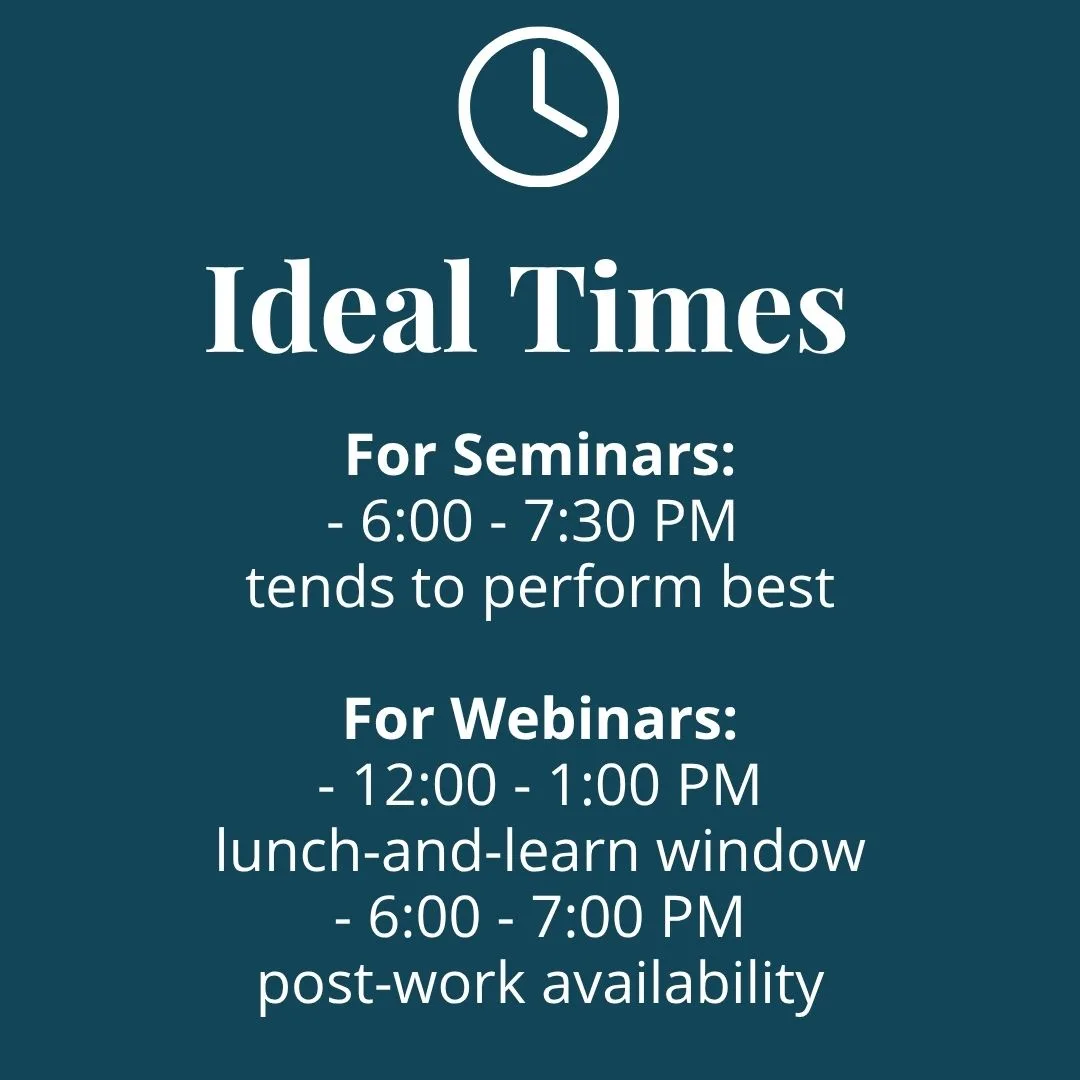
The key is convenience. Your event should fit naturally into your audience’s day, not disrupt it.
Spacing Events for Consistent Engagement (Without Burnout)
One of the most common mistakes is clustering events too closely together or waiting too long between them. Both approaches hurt performance. Hosting too many events in a short period can cannibalize your own audience, reduce perceived value (“There’s always another one”), and lead to lower attendance per event.
On the flip side, long gaps between events can break momentum, cause prospects to forget about you, and limit your ability to nurture leads consistently.
The Ideal Event Cadence
For most industries, a balanced cadence looks like:
- 2–4 events per month
- Spaced 7–14 days apart
This allows you to maintain visibility without overwhelming your audience, capture different segments of availability, and build a predictable pipeline of appointments.
Creating a Monthly Rhythm
Instead of random scheduling, build a repeatable structure. For example:
- Week 1: Webinar (educational overview)
- Week 2: Seminar (deeper dive, in-person connection)
- Week 3: Webinar (topic-specific follow-up)
- Week 4: Seminar or pause (depending on demand)
This creates a natural progression from awareness to engagement to conversion.
Aligning Event Topics with Seasonal Interest
Your audience’s priorities change throughout the year. Your event topics should reflect that. When your content aligns with what people are already thinking about, attendance and engagement increase significantly.
Q1: Tax Season & Financial Organization
During Q1, your audience is focused on finances, compliance, and planning ahead. High-performing topics include tax-efficient retirement strategies, minimizing taxable income in retirement, Social Security timing and tax implications, and financial checklists for the year ahead. This is a prime time for educational events that position you as a proactive guide.
Q2: Planning & Mid-Year Adjustments
By Q2, your audience shifts into evaluating progress and making adjustments. High-performing topics include mid-year financial check-ins, investment strategy adjustments, long-term care and healthcare planning, and estate planning essentials. This is where you help prospects course-correct and stay on track.
Q3: Pre-Retirement Decision Season
Q3 finds your audience preparing for transitions and big decisions. High-performing topics include retirement income planning, risk management strategies, Medicare education and timelines, and protecting assets in uncertain markets. This is a critical window for capturing high-intent prospects.
Q4: Deadlines & Year-End Planning
Q4 brings a mindset of urgency, deadlines, and last-minute decisions. High-performing topics include year-end tax strategies, Required Minimum Distributions (RMDs), open enrollment and Medicare decisions, and legacy and estate planning. This is one of the strongest quarters for conversion-focused events.
Building a Year-Round Event Strategy
To maximize impact, your event calendar should be mapped out well in advance, not planned month to month.
Step 1: Start with Key Dates and Deadlines
Identify major moments that influence your audience — tax deadlines, retirement milestones, enrollment periods, and market cycles. Use these anchor points to guide your event themes.
Step 2: Layer in Audience Behavior
Think about when your audience is most available, most motivated, and most receptive to education. This helps refine timing beyond just “what worked last year.”
Step 3: Balance Education and Conversion
Not every event should feel like a sales opportunity. Your calendar should include both educational events that build trust and awareness, and decision-focused events that encourage action. This balance keeps your audience engaged without feeling pressured.
Step 4: Leave Room for Flexibility
Even the best plans need adjustments. Leave space to respond to market changes, test new topics, and double down on what’s working. A rigid calendar can limit opportunity. Flexibility allows you to optimize in real time.
Advanced Strategies to Maximize Event Performance
Once your calendar is structured, small optimizations can make a big difference.
Test and Refine Timing
Don’t rely solely on industry benchmarks. Test different days of the week, slightly earlier or later time slots, and seasonal variations, then track attendance and engagement to identify your unique “sweet spot.”
Segment Your Audience
Not all prospects behave the same way. Consider hosting beginner vs. advanced sessions, creating niche-topic events for specific audiences, and adjusting timing based on demographic preferences. The more relevant the event, the higher the turnout.
Build Anticipation
Consistency builds familiarity, but anticipation drives attendance. Promote events earlier and more frequently, use themes or series (such as a “Retirement Ready Series”), and create continuity between sessions. When people expect value, they’re more likely to show up.
Repurpose High-Performing Topics
If a topic works, don’t treat it as one-and-done. Repeat it at different times, offer it in both webinar and seminar formats, and update it with new insights. Strong topics should become pillars of your strategy.
Common Event Planning Mistakes to Avoid
Even experienced marketers fall into these traps. They schedule events based on internal availability instead of audience behavior, or they overload one month with events and then go silent the next. Many rely on the same topic year-round without accounting for seasonal relevance, fail to track performance closely enough to optimize future events, and treat each event as a standalone effort rather than part of a larger journey. Avoiding these mistakes alone can significantly improve your results.
Turning Your Event Calendar into a Growth Engine
When your seminar and webinar strategy is aligned with timing, spacing, and audience intent, everything improves. Attendance increases, engagement deepens, conversion rates rise, and marketing dollars go further. Instead of chasing prospects, you create consistent opportunities for them to engage with you, on their terms, at the right time.
Let’s Build Your Event Strategy Together
Don’t leave your 2026 events to chance. Our team will work with you to optimize timing, topics, and follow-up strategies, turning your seminars and webinars into consistent growth opportunities.
Final Thoughts: Plan with Purpose, Not Pressure
The most successful event strategies aren’t built on guesswork. They’re built on intentional planning. By optimizing your event calendar, you move from reactive scheduling to proactive growth. You meet your audience where they are, when they’re ready, with topics that matter.
And that’s what turns events into one of your most powerful marketing tools.