Updated November 5, 2026 — This article has been refreshed to reflect new 2026 research on how many Americans work with an advisor, how prospects find and vet advisors, timely topics like the 2027 Social Security COLA, and strategies for retaining the clients you win.
Financial Advisor Marketing: How to Attract and Retain Clients
Here’s a striking opportunity. Northwestern Mutual’s 2025 Planning & Progress Study found that just 34% of Americans work with a financial advisor. That leaves millions of people making major money decisions on their own. Those who do get help feel the difference. In Northwestern Mutual’s 2026 study, 71% of Americans with an advisor said they felt financially secure, compared with 38% of those without one.
So why is it still so hard to win new clients? Why does financial advisor marketing take so much effort? To answer that, start by seeing things from your prospect’s side of the table.
See Your Practice Through Your Prospect’s Eyes
Many people hesitate to meet with financial advisors. They know a sound retirement plan matters. However, they may not understand the details, and that uncertainty keeps them from acting.
Think about the last time you took your car to a mechanic. You didn’t know what was wrong, much less how to fix it. You relied on the mechanic’s experience to find the problem and the solution. Meanwhile, you worried about what the repair would cost.
That’s how your prospect feels.
Your first step in marketing as a financial planner is to close that knowledge gap. When you explain things clearly and patiently, prospects feel informed instead of sold. That’s how trust begins.
Why Face-to-Face Education Builds Trust Faster
Growing your practice means getting in front of the right people. While marketing tools have changed, one truth hasn’t. Nothing builds trust quite like meeting someone in person.
Recent research supports this. In Kitces’ 2026 Marketing Study, about a quarter of consumers found their advisor through an event or networking, while only about 4% found one through a search engine or AI.
Technology hasn’t replaced that human connection either. Vanguard research found investors were roughly three times as likely to use AI to prepare for an advisor meeting as to replace one. Prospects may arrive better informed, but they still want an expert they can trust.
That’s why financial seminars, educational workshops, and webinars remain so effective. Surrounded by peers in a comfortable setting, prospects can focus on your message. You answer their questions in real time and explain the “fix,” just like a trusted mechanic.
Choose the Format That Fits Your Practice
Each format has its own strengths. The right choice depends on your goals, your audience, and how you like to connect with prospects.
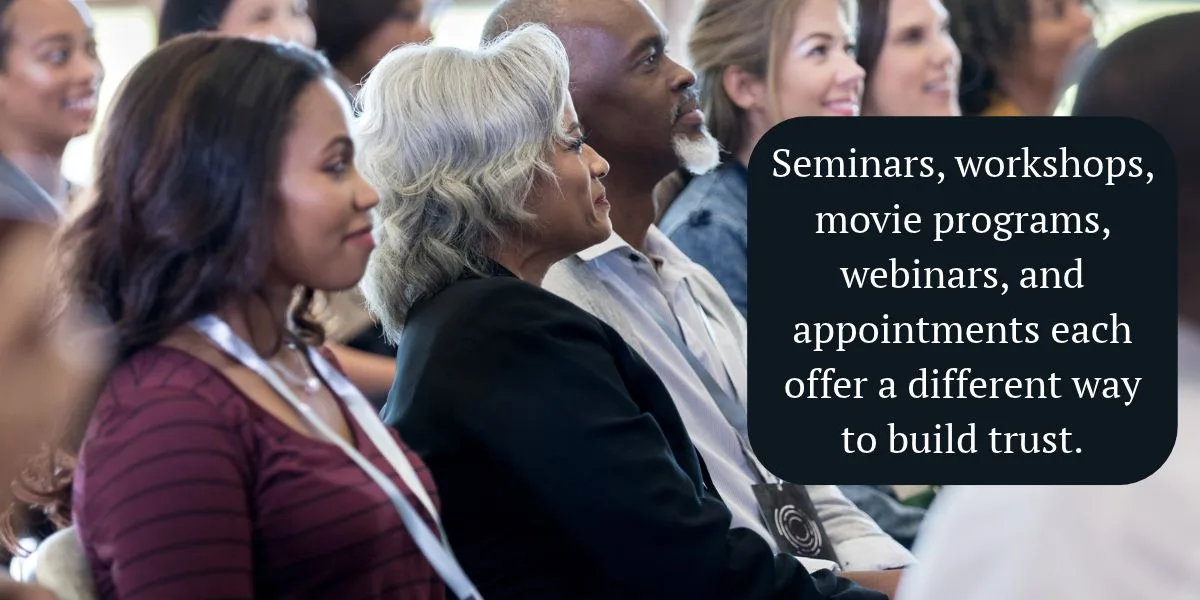
Financial seminars consistently put you in front of qualified, motivated prospects. Sharing your expertise over a meal creates a relaxed atmosphere and encourages guests to take the next step. For many attendees, that means booking a one-on-one appointment. A well-run seminar can do more than build awareness; it can close business directly.
Educational workshops take an interactive, discussion-based approach. Attendees dig into a specific topic, ask questions, and work through real planning scenarios. That hands-on experience positions you as a knowledgeable guide. It also helps prospects understand exactly how you could help them.
Movie programs offer a fresh, low-pressure way to meet prospects. Guests enjoy a film screening paired with a brief educational presentation. The entertainment draws people who might skip a traditional seminar. Meanwhile, the relaxed setting makes it easy to start real conversations.
Webinars let prospects learn from home, which many still prefer. They also extend your reach beyond your local area. You can pair webinars with in-person events to capture people who can’t attend in person. Some advisors also run ongoing webinars that keep educating prospects around the clock.
Pre-set appointments skip the event entirely. Qualified prospects are scheduled directly on your calendar, so you can focus your time on one-on-one conversations. It’s an efficient option when you want a steady flow of meetings without planning an event.
The most successful advisors combine formats. Each one reaches prospects the others might miss.
Plan Your 2027 Events With Confidence
Get recommended seminar and webinar timing, multichannel marketing tips, and a client acquisition worksheet to map out your goals. Download your free 2027 Event Calendar & Planning Guide.
Start With What Your Audience Wants to Learn
Before you plan any event, ask what matters most to your audience. A topic you love to teach may not be the topic prospects want to learn. Focus on their concerns, and you’ll attract more motivated attendees.
Timely topics often draw the strongest response. Here are a few worth considering right now:
- Social Security changes. Beneficiaries will see a 3.6% cost-of-living adjustment in 2027, the largest since 2023. Many retirees will want help understanding what that means for income, taxes, and Medicare premiums.
- Long-term care planning. Six in 10 Americans expect to need long-term care, yet most have no financial plan for it. That gap creates a natural opening for education.
- Retirement readiness. Americans now believe they need $1.46 million to retire comfortably, up more than 15% from last year. Prospects want to know whether they’re on track and what to do if they’re not.
Not sure which topic will resonate? Test it. Offer a few different topics, in person or online, and see which draws the biggest response. When qualified prospects tell you what they want, you can’t go wrong.
Turn Attendees Into Clients
An event is only the first step. What happens next determines whether attendees become clients.
- Book appointments before guests leave. Interest is highest while attendees are still in the room. Offer a few open times and schedule on the spot.
- Follow up quickly and personally. Call every attendee within a few days, whether they booked or not. Mention something specific they shared so the conversation feels personal.
- Stay in touch with those who aren’t ready. Financial decisions take time. Helpful emails, mailed notes, and invitations to future events keep you top of mind until they are.

Keep the Clients You Win
Attracting new clients is only half the equation. Retaining them protects your revenue and fuels future growth. Satisfied clients are also your best source of new business. Kitces’ 2026 research found that 43% of consumers found their advisor by asking friends and family. Every happy client is a potential referral.
- Communicate proactively. Reach out before clients have to call you, especially during market swings or major life events.
- Host client appreciation events. A relaxed educational evening shows gratitude and gives clients a natural reason to bring a friend.
- Review goals regularly. Priorities shift with retirement, inheritances, and family changes. Regular check-ins keep your advice relevant and your relationships strong.
Where Events Fit in Your Marketing Mix
You have plenty of financial advisor marketing options. Digital ads, social media, and your website all play a role. Educational events stand apart because prospects can meet you, learn from you, and decide whether they trust you.
The strongest results often come from combining channels. Direct mail and digital outreach fill your events. Your website and social profiles confirm your credibility. Follow-up turns interest into appointments.
Ready to Attract More Qualified Prospects?
Find out which event formats and topics will connect with your ideal clients. A free consultation gives you a clear plan to fill seats, book appointments, and grow your practice, with no obligation.
Build Trust, Then Build Your Practice
Most Americans still don’t have a financial advisor, and many of them need one. The advisors who win those clients educate first and sell second. Choose topics your audience cares about, pick the event format that fits your style, and follow up with care. Then keep the clients you win and let their referrals fuel your next wave of growth.
Frequently Asked Questions
How do financial advisors attract new clients?
Financial advisors attract new clients most effectively through referrals and educational events. Kitces’ 2026 research found that most consumers found their advisor through friends and family, events, or trusted professionals. Seminars, workshops, and webinars let prospects get to know you before they commit.
What is the difference between a financial seminar and a workshop?
Financial seminars and workshops differ mainly in structure, not size. Seminars typically present a focused topic, often over a meal. Workshops are more interactive, with discussion and hands-on planning. Both can generate qualified appointments.
What topics work best for financial advisor events?
The best event topics address concerns your prospects already have. Social Security, retirement income, long-term care, and estate planning consistently draw strong interest. Testing a few topics helps you find what resonates with your audience.
How can financial advisors retain more clients?
Financial advisors retain more clients by communicating proactively and reviewing goals regularly. Client appreciation events and timely check-ins during life changes also strengthen relationships. Happy clients are more likely to stay and refer others.
Are webinars still effective for financial advisors?
Yes, webinars remain an effective way for financial advisors to reach prospects who prefer learning from home. They extend your reach beyond your local area. Pairing webinars with in-person events helps you connect with more people.